In today’s world of convenience, infant containers—like bouncers, rockers, car seats, and loungers—seem to be everywhere. And while they’re often marketed as must-have baby items, overusing them can do more harm than good for your baby’s development.
At Pinnacle Chiropractic, we work closely with families to promote healthy growth from day one. That means educating parents about the importance of movement, posture, and nervous system regulation—all of which are impacted when babies spend too much time in containers.
If you’re wondering what’s truly best for your baby’s development, here’s what you need to know.
What Is an Infant Container?
An infant container is any device that holds or restrains a baby in a semi-reclined or upright position outside of direct contact with the ground or caregiver. These include:
- Car seats (used outside the car)
- Swings
- Bouncers and rockers
- Loungers (including popular pillow-style ones)
- Jumpers and exersaucers
- Sitting chairs and positioning pillows
These products often restrict natural movement and may keep your baby in one posture for extended periods.
5 Reasons to Limit Infant Container Use
1. Delayed Motor Development
Babies learn to move through repetition and exploration. When placed in containers, they miss the opportunity to practice rolling, reaching, crawling, and eventually walking. Overuse can contribute to delays in:
- Tummy time tolerance
- Rolling and sitting
- Core strength and coordination
- Crawling and cross-pattern movement
2. Flat Head Syndrome (Plagiocephaly)
Extended time in containers can put consistent pressure on the same area of your baby’s skull, leading to flat spots (positional plagiocephaly). This can affect head shape and facial symmetry and may require helmet therapy if not addressed early.
3. Poor Posture and Spinal Development
Many containers place babies in unnatural positions that strain the spine and encourage poor alignment—especially if they are used before the baby has developed proper core strength. This can lead to:
- Poor head and neck control
- Forward head posture
- Tight muscles or tension patterns in the spine
4. Reduced Sensory and Nervous System Input
Your baby’s nervous system is shaped by movement. Being restricted in a container limits tactile input, proprioception (body awareness), and vestibular stimulation (balance and movement), all of which are vital for brain development.
5. Less Interaction and Bonding
Babies placed in containers are often passive observers rather than active participants. Eye contact, floor play, and skin-to-skin time offer much more opportunity for bonding, connection, and emotional regulation.
Healthy Alternatives to Infant Containers
So what should you use instead? Here are safe, natural options that promote movement and neurological development:
Tummy Time
Tummy time is essential for building:
- Head control
- Upper body strength
- Visual tracking
- Spinal curve development
Start with short sessions several times a day, and gradually increase as your baby builds tolerance. Make it fun with mirrors, songs, or laying belly-to-belly.
Floor Play on a Mat or Blanket
Letting your baby explore freely on a soft, safe surface encourages rolling, kicking, and scooting. This allows their brain and body to develop in a balanced and unrestrained way.
Babywearing
Wearing your baby in a structured carrier or wrap:
- Supports healthy hip and spine development
- Promotes bonding and regulation
- Frees your hands while keeping your baby close
Look for ergonomic carriers that support your baby’s hips and allow their knees to stay higher than their bottom in an “M” position.
Supported Sitting—Only When Ready
Once your baby is showing signs of readiness (around 5–7 months), you can encourage supported sitting using your lap or rolled towels. Avoid placing them in sitting containers before they are developmentally ready, as this can create poor posture patterns.
How Chiropractic Care Supports Infant Development
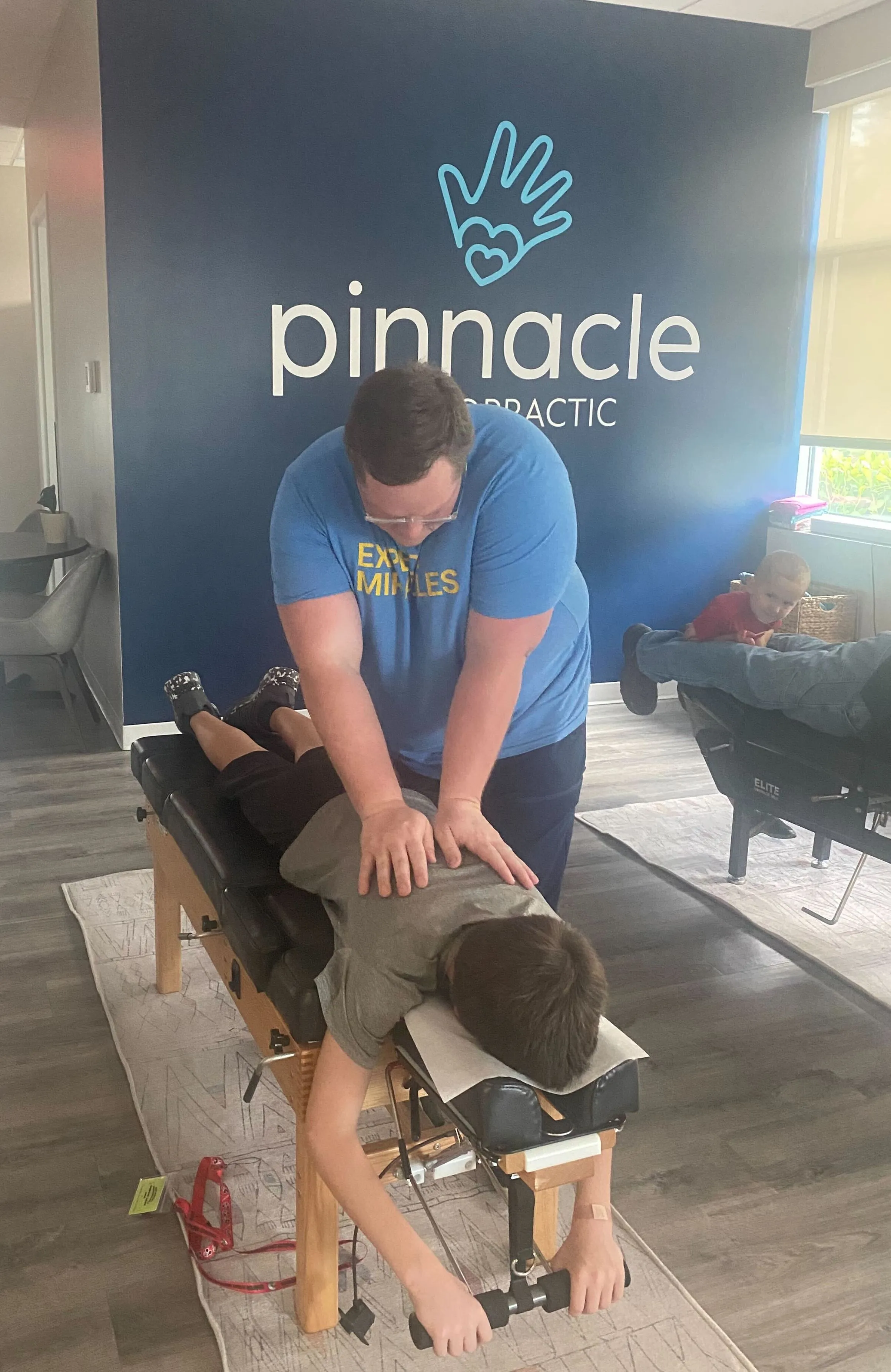
At Pinnacle Chiropractic, we specialize in gentle, neurologically focused care for babies. Our goal is to support optimal development by:
- Reducing spinal and cranial tension
- Improving posture and muscle tone
- Promoting nervous system balance
- Supporting motor milestone achievement
We see many babies who have developed container syndrome patterns—tight necks, arching backs, or delayed movement—and experience real improvement through gentle infant chiropractic adjustments.
Your Baby Was Made to Move
Your baby’s brain and body thrive on movement, connection, and exploration—not confinement. While infant containers may offer short-term convenience, building habits around floor time, babywearing, and responsive care will support long-term strength, coordination, and healthy development.
Want Support in Your Baby’s Development Journey?
Call us at (941) 822-8828 or visit www.pinnaclebradenton.com to schedule your infant’s consultation. We’ll help you create a plan that supports your baby’s nervous system, milestones, and movement—naturally.
Looking for a Pediatric or Prenatal Chiropractor near you?
Visit www.pdcnearme.com to find a certified provider in your area.



.webp)
.webp)