Left-Handed, Right-Handed, or Still Deciding? Handedness and Crossing the Midline
Your preschooler colors with the left hand, then the right, and your toddler reaches for toys with whichever hand is closest. Is this normal, or a sign something is off? In most cases, it is part of typical development. At Pinnacle Chiropractic, we answer this question often for families in Lakewood Ranch, Sarasota, and Bradenton, and it connects to something worth understanding: how the two sides of the brain and body learn to work together.
Key Summary
• Many children show a clear hand preference between about ages three and five, and it is common to switch hands earlier.
• Crossing the midline means reaching across the center of the body with a hand, foot, or eye.
• This skill supports reading, writing, and coordinated movement.
• Play, crawling, and varied movement help build it, and children should never be forced to change hands.
• If your child avoids crossing the midline or struggles with coordination, mention it to your pediatrician and to us.
When Do Kids Choose a Dominant Hand?
Babies often use both hands equally. Preferences may emerge in toddlerhood, and many children settle into a consistent dominant hand by preschool or early school age. Some children remain mixed in how they use hands for different tasks, which is also within the range of normal. Researchers estimate that roughly one in ten people is left-handed, and it is a natural variation, not a problem to correct.
What Does Crossing the Midline Mean?
Imagine a line running down the center of the body. Crossing the midline means moving an arm, leg, or eye across that line, such as reaching with the right hand for an object on the left. It requires the two hemispheres of the brain to communicate and coordinate. Children who avoid crossing may switch hands at the center of a page, turn their whole body to reach, or have trouble with tasks like drawing a horizontal line.
Why This Matters
Crossing the midline underpins skills such as tracking words across a page, cutting with scissors, tying shoes, and playing sports. When it is difficult, children may tire quickly during writing or seem clumsy. Our post on messy handwriting and fine motor struggles explores how coordination and the nervous system connect to schoolwork.
Signs Parents May Notice
• Switching hands in the middle of drawing or writing.
• Avoiding reaching across the body, such as when eating or getting dressed.
• Difficulty with crawling patterns or cross-body movements like skipping.
• Trouble reading lines of text, or losing one's place.
• Delayed or very inconsistent hand preference past around age five or six.
How Crawling and Early Movement Fit In
Crawling is a classic cross-body activity, because opposite arm and leg move together. This is one reason we care about tummy time and crawling in infants. Our article on tummy time explains how early movement builds the foundation. Children who skipped or had little crawling are not destined for challenges, but movement play can help build these connections later.
The Nervous System Connection
The corpus callosum is a thick band of nerve fibers connecting the two sides of the brain, and it helps coordinate movements that involve both sides of the body. Crossing the midline and bilateral coordination develop as these connections strengthen through movement and experience. Supporting balanced nervous system function is one piece of supporting that development. Related patterns appear in our article on balance and coordination in children.
How Pinnacle Chiropractic Approaches Coordination
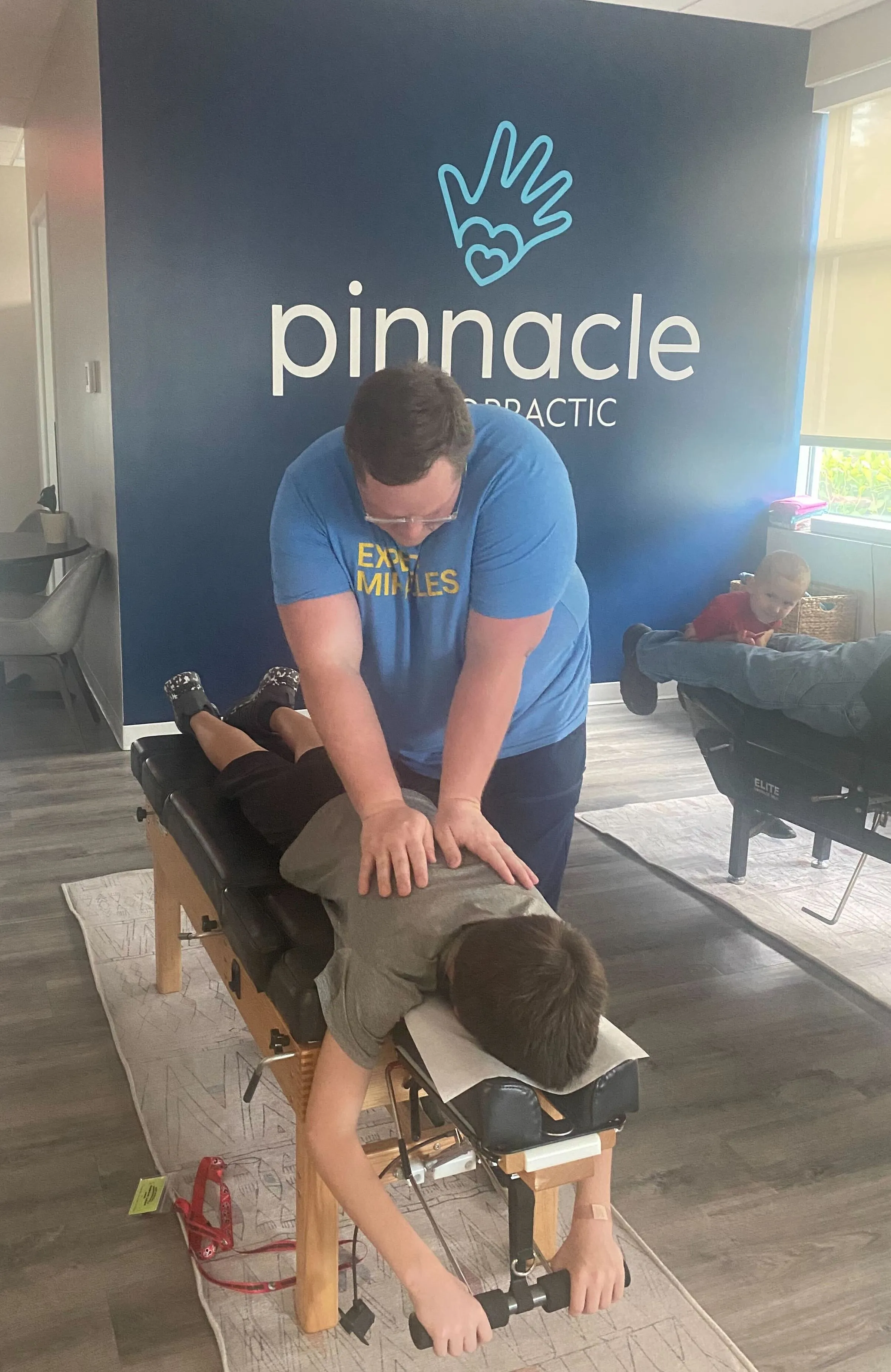
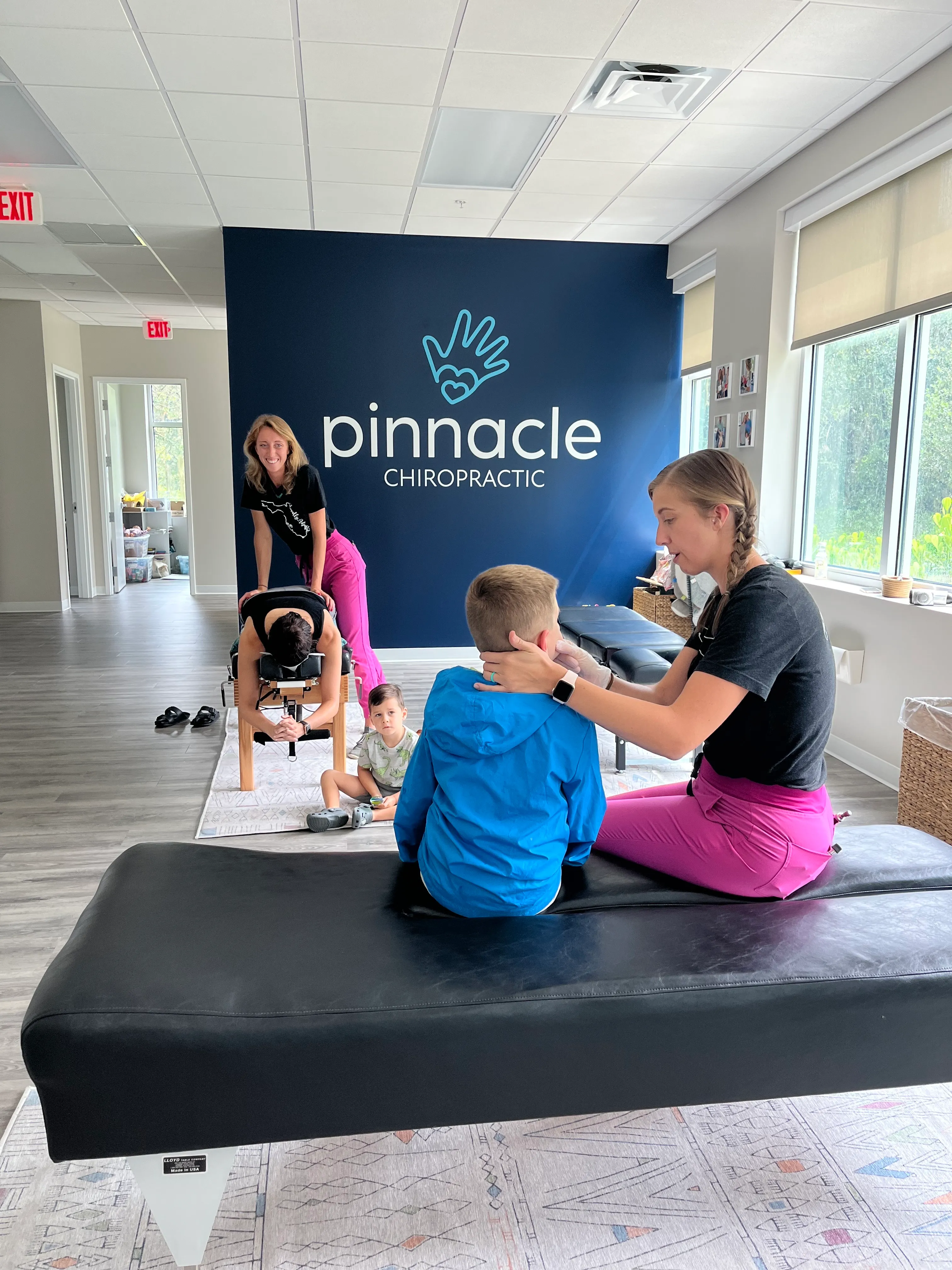
At Pinnacle Chiropractic, we start with a nervous system evaluation using objective INSiGHT scans, because we measure, we don't guess. We then build a personalized plan of gentle pediatric chiropractic adjustments designed to support nervous system function, and we share movement ideas for home. We do not claim to treat or cure coordination differences, and we work alongside your pediatrician and any occupational therapist.
Games That Build Crossing the Midline
• Cross-crawl marching: touch the right hand to the left knee, then switch.
• Draw big figure-eights in the air or on a chalkboard.
• Pass a ball from one side to the other around the body.
• Swimming, climbing, and animal walks like bear crawls.
• Clapping games that cross the body.
FAQs
At what age should my child have a dominant hand?
Many children show a preference by around age three to five, and some take a little longer. Switching hands earlier is common.
Should I make my child use their right hand?
No. Forcing a change is discouraged, and a child's natural preference should be respected.
Is it a problem if my child is ambidextrous?
It is uncommon but not necessarily a problem. If it comes with coordination or school challenges, mention it to your pediatrician.
What if my child never crawled?
Many children who skip crawling develop well. Movement games can help build cross-body coordination, and you can ask your providers if you have concerns.
Can chiropractic care help with crossing the midline?
Gentle pediatric chiropractic adjustments are designed to support nervous system function, which plays a role in coordination. They work alongside movement play and therapy, not in place of them.
Final Thoughts
Hand preference is a natural part of development, and crossing the midline is a skill built through play and movement. Offering lots of opportunities to move, climb, and cross the body goes a long way.
If you would like to understand how your child's nervous system and coordination fit together, Pinnacle Chiropractic is here to help. Our neurologically focused approach uses objective INSiGHT scans and gentle pediatric chiropractic adjustments designed specifically for children. Contact Pinnacle Chiropractic to schedule a consultation.