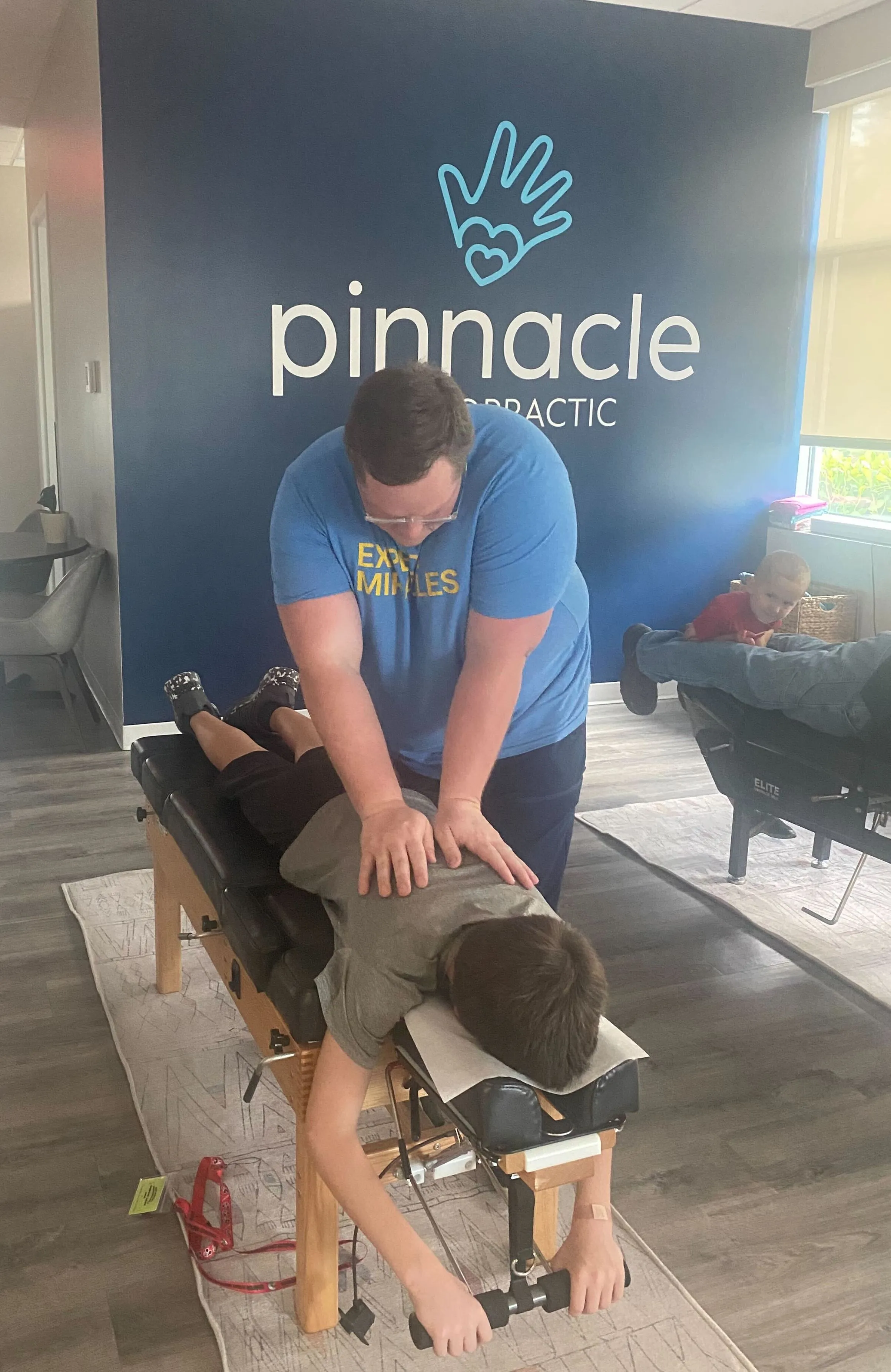
Nail-biting, thumb-sucking past toddlerhood, hair-twirling, skin-picking — a lot of parents watch these habits show up in their kids and wonder whether it's just a phase or something worth paying closer attention to. At Pinnacle Chiropractic, we look at repetitive self-soothing habits through a nervous system lens, since they're often the body's way of managing stress or excess nervous energy when a child doesn't have another outlet.
Gentle pediatric chiropractic adjustments are designed to support nervous system regulation, which is part of why we see these habits as worth understanding rather than just something to nag a child about.
Here's what commonly drives these habits, what to watch for, and how a chiropractic approach fits into supporting your child.
Key Summary
• Nail-biting, thumb-sucking, hair-twirling, and similar habits are extremely common in kids and often connected to how a child's nervous system manages stress.
• These habits tend to intensify during periods of anxiety, boredom, or big transitions, and ease up as a child develops other coping tools.
• Common contributing factors include nervous system dysregulation, anxiety, sensory-seeking behavior, and habit/comfort patterns.
• Habits that cause physical injury, persist alongside signs of significant anxiety, or don't respond to gentle support should be discussed with your pediatrician.
• Pediatric chiropractic adjustments are designed to support nervous system regulation, which can play a role in easing the underlying tension behind these habits.
Why Do Kids Develop These Habits?
Nail-biting, thumb-sucking, hair-twirling, skin- or scab-picking, and similar repetitive behaviors are collectively common enough that most kids do at least one of them at some point. They tend to serve a self-soothing function — a way for a child's body to manage excess nervous energy, stress, or even boredom, especially when a child doesn't yet have the words or tools to process what they're feeling. For a lot of kids, these habits ebb and flow, showing up more during stressful stretches and fading during calmer ones.
Why This Matters
These habits aren't just a cosmetic annoyance. When they intensify, it's often a signal that a child's nervous system is working overtime, showing up as difficulty with emotional control around stress, transitions, or overstimulation. Paying attention to when and why a habit ramps up — rather than only focusing on stopping the behavior itself — gives parents a more useful picture of what's actually going on for their child.
Common Contributing Factors
These habits are rarely about just one thing. Some of the most common contributing factors we see include:
• Nervous system dysregulation — a nervous system that's stuck in a heightened stress state can drive repetitive, self-soothing behaviors as a way to find some sense of calm.
• Anxiety — worry about school, social situations, or changes at home often shows up physically in kids before it shows up in words.
• Sensory-seeking behavior — some kids are drawn to the specific sensory input a habit provides, independent of stress.
• Boredom or transition periods — habits often spike during downtime, car rides, or screen time, and during major transitions like starting school.
• Simple habit and comfort — sometimes a behavior that started for one reason sticks around purely as a comfort habit, long after the original trigger has faded.
Signs Parents May Notice
• A habit that ramps up noticeably during stressful periods — starting school, a family change, or a busy week.
• Nail-biting or skin-picking severe enough to cause soreness, bleeding, or visible damage.
• A habit your child seems unaware they're doing, or can't easily stop even when they want to.
• General signs of tension or difficulty settling alongside the habit — trouble sleeping, irritability, or frequent worry.
• A habit that persists well past the age most kids naturally outgrow it, like thumb-sucking continuing into elementary school.
The Nervous System Connection
The nervous system governs how the body responds to stress — shifting between a calm, regulated state and a heightened, "on alert" state. When a child's nervous system spends a lot of time in that heightened state, repetitive self-soothing behaviors like nail-biting or hair-twirling are one of the ways the body tries to bring itself back to calm. At Pinnacle Chiropractic, we use objective INSiGHT scans — thermography, surface EMG, and heart rate variability — to get a clear, measured picture of how a child's nervous system is functioning, rather than guessing. We measure, we don't guess.
How Pinnacle Chiropractic Approaches Anxious Habits
When a family comes to us with a child dealing with a persistent habit like nail-biting or hair-twirling, we start with a nervous system evaluation to objectively assess tension and regulation patterns. From there, we build a personalized care plan using gentle, age-appropriate pediatric chiropractic adjustments designed to support better nervous system regulation. Many Lakewood Ranch, Sarasota, and Bradenton families notice these habits are just one piece of a bigger pattern of heightened stress — something that can sometimes even show up as more frequent illness, since a dysregulated nervous system affects immune function too.
What Parents Can Do
• Notice patterns rather than just the behavior — when does it ramp up, and what tends to be happening around it?
• Offer a replacement outlet for nervous energy, like a fidget toy or stress ball, without shaming the original habit.
• Build in predictable calm-down time, especially during busy or transitional periods.
• Avoid drawing constant attention to the habit itself, which can sometimes reinforce it rather than reduce it.
• Consider a nervous system evaluation with a pediatric chiropractor to get an objective look at what may be contributing.
FAQs
Is nail-biting or thumb-sucking a sign of anxiety?
It can be, but not always — these habits are also linked to sensory-seeking behavior, boredom, and simple comfort habits that have nothing to do with anxiety. Watching when the habit intensifies gives a better clue than the habit alone.
At what age should thumb-sucking stop?
Most kids naturally stop somewhere between ages 2 and 4. Thumb-sucking that continues into elementary school, especially if it's affecting dental development, is worth discussing with your pediatrician or dentist.
Can chiropractic care help with these habits?
Gentle pediatric chiropractic adjustments are designed to support nervous system regulation, which can play a role in reducing the underlying tension that drives many of these behaviors. It works best alongside your pediatrician's guidance, not as a replacement for it.
Should I punish my child for nail-biting?
Punishment or shame tends to add more stress, not less, which can make a self-soothing habit worse rather than better. A calmer, curiosity-based approach — noticing patterns and offering alternatives — tends to work better.
What happens during a pediatric chiropractic visit for anxious habits?
At Pinnacle Chiropractic, we start with INSiGHT neurological scans to objectively assess nervous system function, then use those results to build a personalized, gentle care plan for your child.
Final Thoughts
Nail-biting, thumb-sucking, and similar habits are common in childhood and usually nothing to worry about — but when they intensify or persist, they're often a window into how a child's nervous system is managing stress. Understanding that connection, alongside your pediatrician's guidance for anything more significant, gives families a fuller picture of what's going on and what can help.
If your child has a persistent habit like nail-biting, thumb-sucking, or hair-twirling, Pinnacle Chiropractic can help you better understand what may be contributing to it. Our neurologically focused approach uses objective INSiGHT scans and gentle pediatric chiropractic adjustments designed specifically for children. Contact Pinnacle Chiropractic to schedule a consultation.



.webp)
.webp)