"Tech Neck" in Kids: How Screen Time Affects Posture and the Nervous System
Tablets, phones, and laptops are part of nearly every kid's day now, whether it's for schoolwork, gaming, or watching videos. But all that time spent hunched over a screen adds up — and "tech neck," the forward-head, rounded-shoulder posture that comes from looking down at a device for hours, is showing up in kids and teens at earlier ages than ever.
At Pinnacle Chiropractic, we see tech neck as more than a posture issue. The spine and nervous system are closely connected, and the same forward-head position that strains the neck and shoulders can also affect how well the nervous system is communicating throughout the body. Pediatric chiropractic care is designed to support both — helping restore better spinal alignment and nervous system function for kids who spend a lot of time on screens.
Here's what tech neck is, why it matters for kids specifically, and how Pinnacle Chiropractic approaches it.
Key Summary
• "Tech neck" refers to the forward-head, rounded-shoulder posture caused by looking down at phones, tablets, and laptops for extended periods.
• Kids' spines are still developing, which can make them more susceptible to postural strain from repeated screen use.
• Forward-head posture adds significant extra stress to the neck and upper spine — and the neck houses nerves connected to the nervous system's regulation of the rest of the body.
• Common signs include neck or shoulder tension, headaches, and a visibly forward or slouched posture, especially after screen use.
• Pediatric chiropractic adjustments, combined with practical screen-time habits at home, are designed to support better posture and nervous system function.
What Is "Tech Neck"?
Tech neck describes the posture pattern that develops when someone repeatedly tilts their head forward and down to look at a screen — a phone, tablet, laptop, or gaming device. Over time, this position can lead to a forward-head posture, rounded shoulders, and tightness through the neck and upper back. It's sometimes also called "text neck." For every inch the head shifts forward from a neutral position over the shoulders, the effective load on the neck and upper spine increases substantially, since the neck muscles have to work much harder to support the head's weight at that angle.
Why This Matters for Kids Specifically
Kids' spines, including the curves and muscle support around the neck, are still developing well into the teenage years. Repeated hours of forward-head posture during those developmental years may have a more lasting impact than the same posture would in an adult whose spine is already fully formed. Add in the reality that many kids are now using screens for school as well as entertainment, and the cumulative time spent in this position each day can be significant.
The neck is also home to nerves that play a role in regulating function throughout the body, which is part of why Pinnacle Chiropractic looks at tech neck through a nervous-system lens rather than treating it as a purely muscular or cosmetic posture issue.
Signs Parents May Notice
• A visibly forward head position or rounded shoulders, especially right after screen time.
• Complaints of neck stiffness, tightness, or soreness.
• Headaches, particularly at the base of the skull or across the forehead.
• Shoulder or upper back tension.
• Difficulty sitting up straight for extended periods, or fatigue with upright posture.
The Nervous System Connection
The cervical spine (the neck) protects and supports nerve pathways that connect the brain to the rest of the body, and it's also closely linked to the body's stress response system. When the neck is under chronic postural strain from tech neck, it can create tension that affects nervous system communication — potentially showing up as more than just physical discomfort. At Pinnacle Chiropractic, we use objective INSiGHT scans — thermography, surface EMG, and heart rate variability — to measure how a child's nervous system is functioning, rather than guessing based on posture alone. We measure, we don't guess.
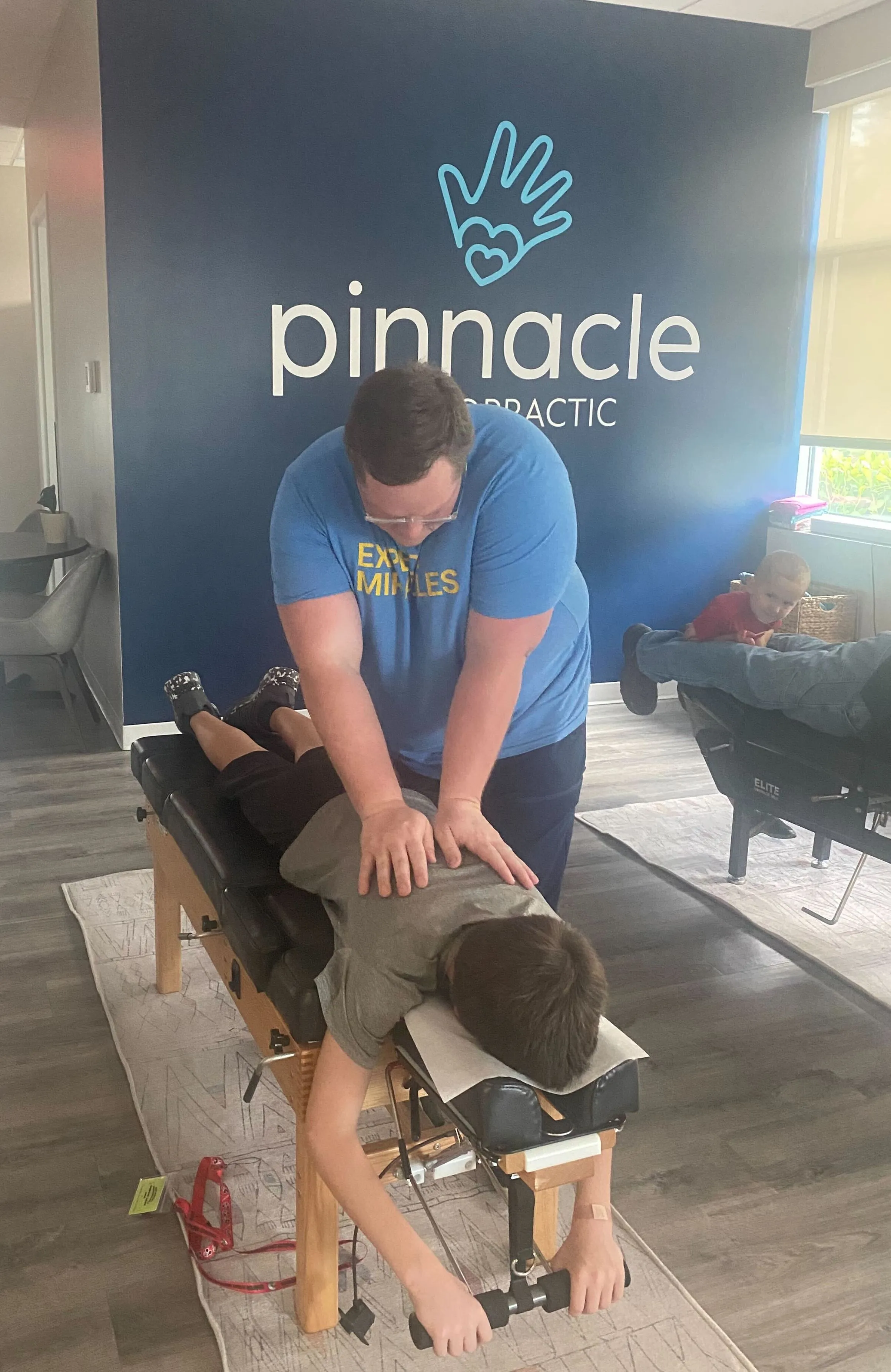
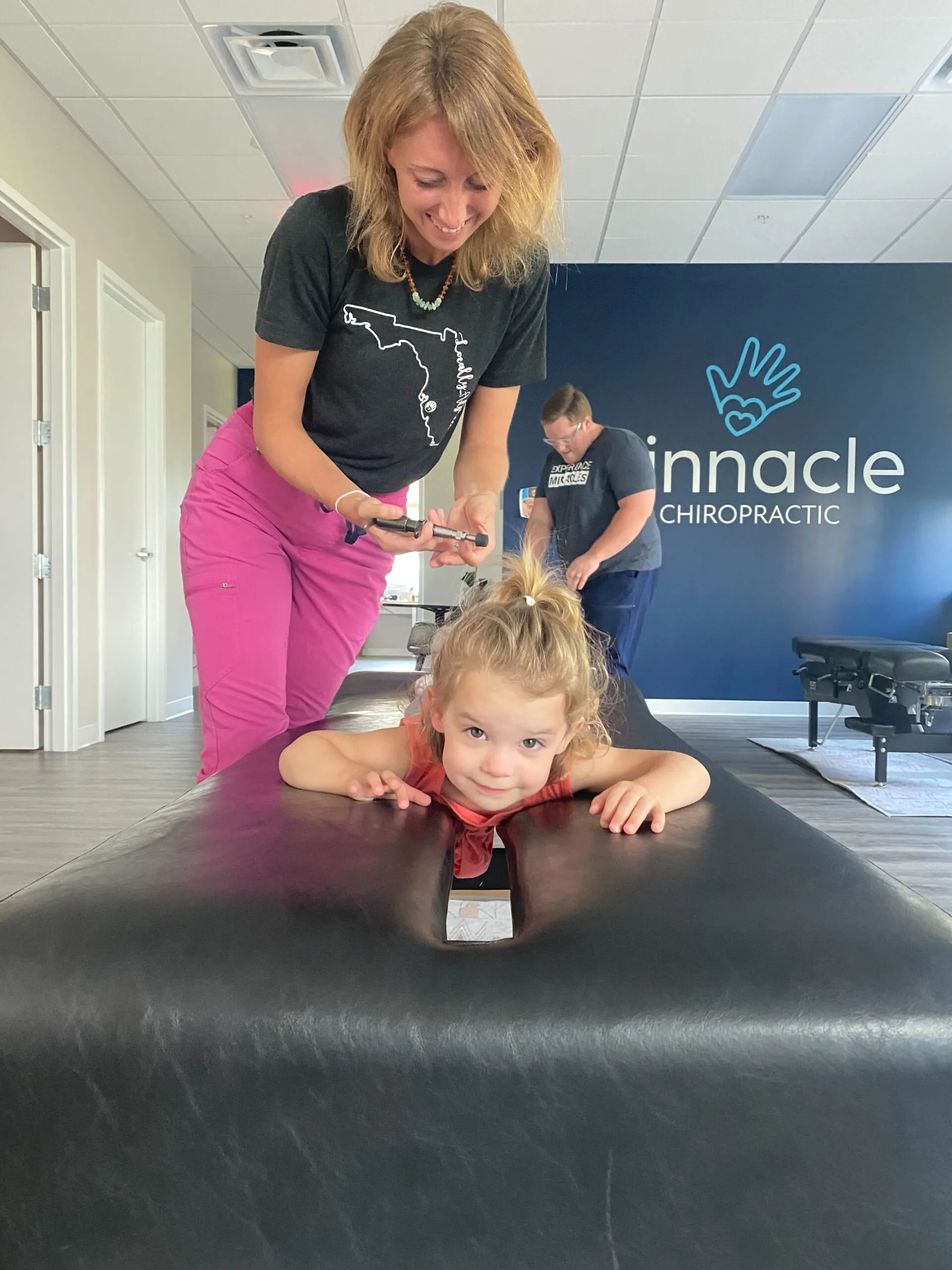
Gentle pediatric chiropractic adjustments are designed to help release tension in the neck and upper spine and support the nervous system's ability to regulate and adapt — which plays a role in supporting healthier posture over time, alongside the practical screen-habit changes below.
How Pinnacle Chiropractic Approaches Tech Neck
When a family brings in a child dealing with tech neck, we start with a nervous system evaluation to get an objective picture of tension patterns through the neck, shoulders, and upper spine. From there, we build a personalized care plan of gentle, age-appropriate adjustments designed to help release that tension and support healthier posture and nervous system function. For many Lakewood Ranch, Sarasota, and Bradenton families, this pairs naturally with the everyday habit changes below — the two work together rather than one replacing the other.
What Parents Can Do
• Set screen height at or near eye level whenever possible, rather than having kids look down and forward.
• Build in regular movement breaks — a good rule of thumb is a short break every 20-30 minutes of continuous screen use.
• Encourage activities that naturally counter forward-head posture, like swimming, gymnastics, or simply playing outside.
• Model good posture yourself — kids often mirror the habits they see at home.
• Consider a nervous system evaluation with a pediatric chiropractor if your child shows signs of ongoing neck or shoulder tension.
FAQs
Can screen time really affect my child's posture?
Yes. Repeated hours spent looking down at a phone, tablet, or laptop can lead to a forward-head, rounded-shoulder posture pattern, especially in kids whose spines are still developing.
What are the first signs of tech neck in kids?
Common early signs include neck or shoulder tightness, headaches (especially at the base of the skull), and a visibly forward head position, particularly noticeable right after screen use.
Is tech neck permanent?
Not necessarily. Posture patterns that develop from repeated habits can often improve with a combination of habit changes, movement, and care that supports spinal alignment and nervous system function — especially when addressed while a child's spine is still developing.
How can pediatric chiropractic care help with tech neck?
Gentle pediatric chiropractic adjustments are designed to help release tension in the neck and upper spine and support better nervous system communication, which plays a role in supporting healthier posture over time.
How much screen time is too much for posture?
There's no single universal number, but the position and duration matter more than the raw total — screens held at eye level with regular breaks are far less taxing on the neck than long, continuous sessions spent looking down.
Final Thoughts
Tech neck isn't just a "bad habit" to nag kids about — it's a real postural and nervous system pattern that's worth understanding, especially while a child's spine is still developing. Addressing it usually works best from two directions at once: practical screen-time habits at home, and support for the underlying spinal alignment and nervous system function.
If your child is showing signs of neck or shoulder tension from screen use, Pinnacle Chiropractic can help you better understand what may be going on. Our neurologically focused approach uses objective INSiGHT scans and gentle pediatric chiropractic adjustments designed specifically for children. Contact Pinnacle Chiropractic to schedule a consultation.



.webp)
.webp)