.webp)
Toe Walking in Toddlers: Why It Happens and How Pediatric Chiropractic Care Can Help
If your toddler walks on their toes more often than not, you're probably wondering whether it's just a quirky phase or something worth looking into. Toe walking is common in young children, and in most cases it's connected to the same thing Pinnacle Chiropractic looks at with almost every walking, crawling, or coordination concern: how well a child's nervous system and musculoskeletal system are communicating and working together.
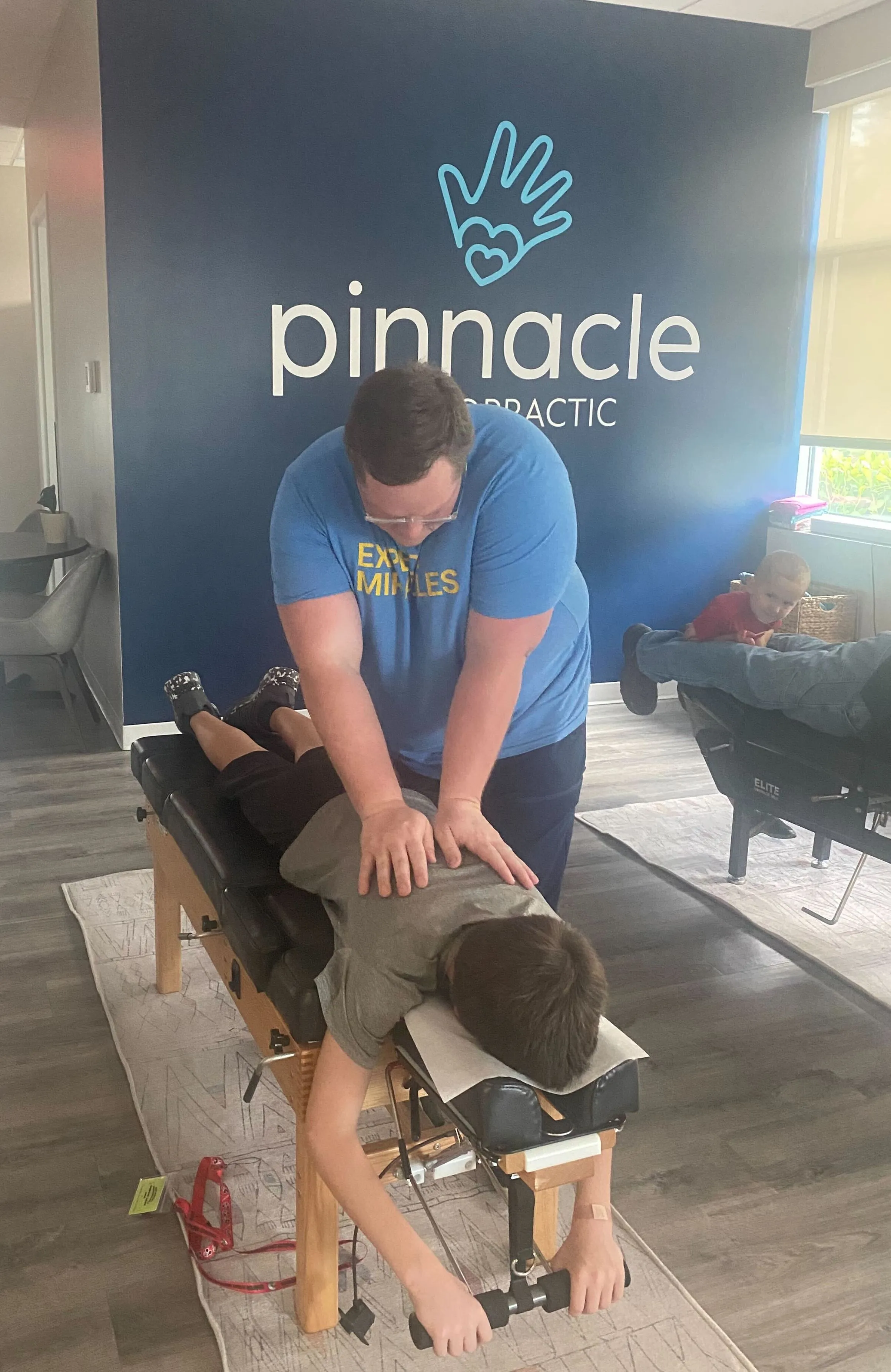
At Pinnacle Chiropractic, we approach toe walking from a nervous system perspective first, not just a "watch and wait" one. Gentle pediatric chiropractic adjustments are designed to support the nervous system connections that influence muscle tone, balance, and movement patterns — which means they can play a meaningful role in how a toe-walking pattern develops and changes over time.
This article walks through what toe walking is, why it happens, what to watch for, and how a pediatric chiropractic approach fits into supporting your child.
Key Summary
• Toe walking is common in toddlers learning to walk and often resolves on its own, but persistent toe walking past age 2–3 is worth a closer look.
• It can be connected to muscle tone, tight calf muscles, sensory processing patterns, or how the nervous system is coordinating movement and balance.
• Pediatric chiropractic care is designed to support nervous system function and musculoskeletal balance, which can play a role in how a child's gait develops.
• Persistent toe walking alongside other developmental signs should always be evaluated by your pediatrician first, to rule out underlying neurological or muscular conditions.
• Gentle adjustments, INSiGHT scans, and a personalized care plan are how Pinnacle Chiropractic approaches toe walking for Lakewood Ranch, Sarasota, and Bradenton families.
What Is Toe Walking?
Toe walking is exactly what it sounds like: a child walks on the balls of their feet or tiptoes, with little or no heel contact with the ground. It's extremely common in children just learning to walk, and many toddlers toe walk here and there without it meaning anything at all. What matters more is the pattern over time — whether it's occasional and fading, or persistent and the child's primary way of walking well past their second birthday.
Why This Matters
Gait patterns aren't just about the feet. The way a child walks reflects how their brain and nervous system are coordinating muscle tone, balance, proprioception (body awareness), and motor planning. When a toddler consistently walks on their toes, it can be a sign that something in that coordination chain — often tight calf muscles, altered muscle tone, or nervous system regulation — is contributing to the pattern. Addressing the underlying nervous system and musculoskeletal picture, rather than just the visible habit, is where pediatric chiropractic care can play a key role.
Common Contributing Factors
Persistent toe walking in toddlers is often associated with a few different contributing factors, and more than one can be present at once:
• Tight calf muscles or Achilles tendons that make it more comfortable to walk on the toes than to place the heel flat.
• Sensory processing differences, where a child may be more or less sensitive to how their feet feel against different surfaces.
• Muscle tone and coordination patterns that affect how the nervous system is directing movement through the legs, hips, and pelvis.
• Habit — some toddlers simply started toe walking early on and the pattern became their default, even after the original reason has faded.
• In a smaller number of cases, toe walking can be associated with a broader neurological or developmental condition, which is why persistent toe walking should always include a conversation with your pediatrician.
Signs Parents May Notice
• Walking on tiptoes most or all of the time, rather than occasionally.
• Difficulty getting the heels flat on the floor, even when asked or when standing still.
• Tightness in the calves that seems to limit ankle flexibility.
• Toe walking that continues well past age 2, or that appears alongside other coordination, sensory, or speech/language differences.
• A family history of toe walking, which can sometimes run in families.
The Nervous System Connection
At Pinnacle Chiropractic, we look at gait patterns like toe walking through the lens of the nervous system, since the brain and spinal cord are what coordinate muscle tone, balance, and movement throughout the body. When there's tension or dysfunction along the spine — particularly in areas connected to the pelvis, hips, and lower body — it can influence how efficiently those movement signals travel. Gentle pediatric chiropractic adjustments are designed to help reduce that tension and support clearer nervous system communication, which is part of why we consider it a relevant piece of the picture for many toddlers who toe walk.
How Pinnacle Chiropractic Approaches Toe Walking
We start with objective INSiGHT neurological scans — thermography, surface EMG, and heart rate variability — to get an objective look at how a child's nervous system is functioning. We measure, we don't guess. From there, we build a personalized care plan using gentle, age-appropriate pediatric chiropractic adjustments designed to support better nervous system communication and more balanced muscle tone through the hips, pelvis, and legs. Many Lakewood Ranch, Sarasota, and Bradenton families come to Pinnacle Chiropractic specifically because they want a natural, nervous-system-focused option alongside anything their pediatrician recommends — not instead of it.
What Parents Can Do
• Track how often your child toe walks — occasionally, or nearly all the time — since that pattern matters more than a single observation.
• Encourage barefoot play on varied textures (grass, sand, carpet) to support sensory feedback through the feet.
• Talk with your pediatrician if toe walking is persistent or paired with other developmental signs.
• Consider a nervous system evaluation with a pediatric chiropractor to get an objective look at muscle tone and spinal function.
• Be patient — many toddlers naturally transition out of toe walking as their nervous system and muscular coordination mature, especially with supportive care along the way.
FAQs
Is toe walking normal in toddlers?
Yes, occasional toe walking is very common in toddlers who are newer walkers. It's the persistence of the pattern past around age 2–3, or toe walking that's the child's dominant way of walking, that's worth a closer look.
Will my child grow out of toe walking?
Many toddlers do transition out of toe walking on their own as their coordination and muscle tone develop. For children where the pattern persists, addressing contributing factors like calf tightness, sensory processing, and nervous system function can support that transition.
Can chiropractic care fix toe walking?
Pediatric chiropractic care doesn't promise to "fix" toe walking, but gentle adjustments are designed to support nervous system function and musculoskeletal balance, both of which play a role in gait patterns. It works best as part of a broader picture that includes your pediatrician's guidance.
When should I be concerned about toe walking?
If toe walking is persistent, paired with significant calf tightness, or appears alongside delayed speech, motor skills, or other developmental signs, talk with your pediatrician. These can sometimes point to something that needs medical evaluation.
What happens during a pediatric chiropractic visit for toe walking?
At Pinnacle Chiropractic, we start with INSiGHT neurological scans to objectively assess nervous system function, then use those results to build a personalized, gentle care plan for your child.
Final Thoughts
Toe walking is one of those toddler patterns that's usually nothing to worry about — but when it sticks around, it's worth understanding rather than ignoring. Looking at the nervous system and musculoskeletal factors behind the pattern, alongside your pediatrician's guidance, gives you the fullest picture of what's going on and what can help.
If your toddler is a persistent toe walker, Pinnacle Chiropractic can help you better understand what may be contributing to it. Our neurologically focused approach uses objective INSiGHT scans and gentle pediatric chiropractic adjustments designed specifically for children. Contact Pinnacle Chiropractic to schedule a consultation.



.webp)
.webp)