Babywearing and Your Baby's Body: Safe Positioning and Comfort Tips
Carrying your baby close in a wrap, sling, or structured carrier can make daily life easier, soothe a fussy newborn, and free your hands. It can also affect how your baby's body is positioned for hours at a time, and how your own back and shoulders feel. At Pinnacle Chiropractic, we love supporting families across Lakewood Ranch, Sarasota, and Bradenton, and we get lots of questions about carriers. This article covers safe positioning, comfort, and when to check in.
Key Summary
• Safe babywearing keeps your baby's airway clear, back supported, and body close and snug.
• A well-fitted carrier supports a baby's hips in a natural, supported position and distributes weight comfortably for the parent.
• Variety matters, so baby should not spend all day in any one position or device.
• Parents can ease back and shoulder strain with good fit and posture.
• Gentle infant chiropractic care is designed to support nervous system function and comfortable movement, alongside your pediatrician's guidance.
Why Positioning Matters
Newborns have little head control, and their spines and hips are still developing. A carrier that holds them securely, with natural curves and supported hips, can be a comfortable place to be. Poor positioning can compromise breathing or put strain on your baby's neck and hips. Following the manufacturer's instructions and basic safety rules is essential.
The TICKS Safety Checklist
A simple memory aid used by babywearing educators is TICKS:
• Tight — the carrier should hold your baby snugly against you, so they do not slump.
• In view at all times — you should be able to see your baby's face by glancing down.
• Close enough to kiss — your baby's head should be high enough that you could kiss the top of it.
• Keep chin off the chest — leave at least a finger's width of space under the chin to protect the airway.
• Supported back — your baby's back should be held in its natural curve, not flattened or overly curled.
Healthy Hip Positioning
Many pediatric groups recommend positions where your baby's thighs are supported and their knees are about level with or slightly higher than their bottom, in a spread-squat position, rather than legs hanging straight down. Choose a carrier with a seat wide enough to support from knee to knee, and talk with your pediatrician if you have any concerns about your baby's hips.
Signs to Check With Your Providers
• Baby always favors one direction or tilts the head to one side. Our article on torticollis explains what may be going on.
• A flat spot is developing on one side of the head.
• Baby seems uncomfortable or resists being carried every time.
• Trouble with movement or little interest in tummy time. See tummy time and how to make it easier.
Protecting Your Own Back
Parents are carrying more than their baby. Postpartum bodies are still recovering, and extra load can strain the neck, shoulders, and low back.
• Adjust the straps so the baby sits high and close to your chest.
• Use a carrier with wide, padded shoulder straps and a supportive waist belt.
• Stand tall, with your ribs stacked over your pelvis, rather than leaning back.
• Alternate sides or carrying positions if you use a sling.
• Take breaks, and stretch your chest and shoulders.
Our postpartum recovery guide shares more about easing back into daily life.
How Pinnacle Chiropractic Supports Families
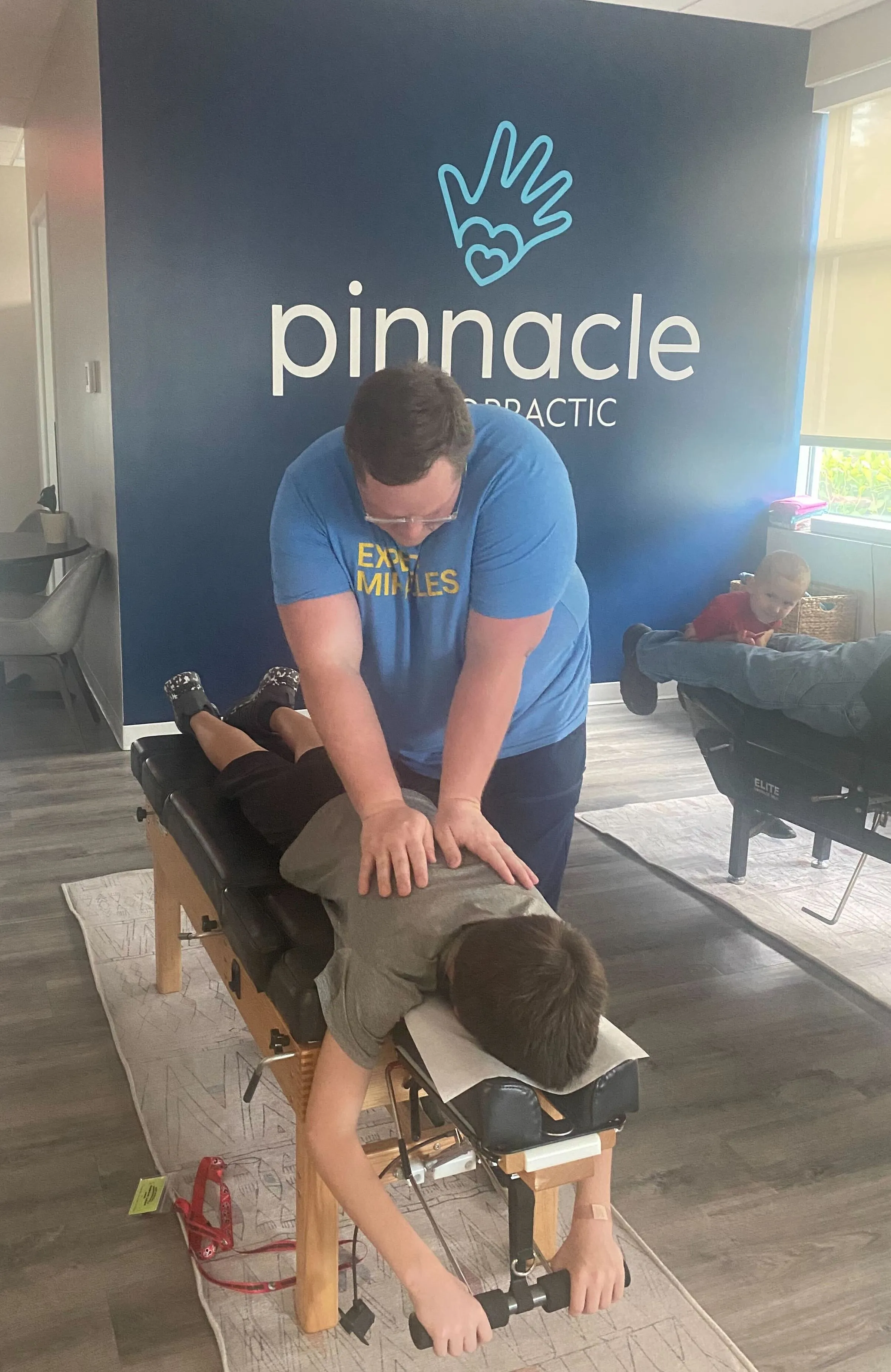
At Pinnacle Chiropractic, our infant chiropractic care is very gentle, commonly compared to the pressure used to check the ripeness of a tomato. We begin with a nervous system evaluation using objective INSiGHT scans, because we measure, we don't guess, and we support parents too with postpartum care. We do not claim that adjustments treat or cure any condition, and we work alongside your pediatrician.
FAQs
Is babywearing safe for newborns?
It can be when done carefully, following the carrier's instructions and the TICKS checklist. Premature babies or babies with health concerns need specific guidance from their pediatrician.
Can babywearing cause hip problems?
Carrying with hips supported in a natural spread position is considered healthy, while legs hanging straight down in a narrow carrier is discouraged. Ask your pediatrician if you have concerns.
How long can I carry my baby at a time?
Follow your baby's cues and your own comfort, and vary positions through the day. Take breaks if either of you is tired.
Can a carrier cause a flat head?
Any prolonged time in a single position can contribute, so mix up positions and keep up with tummy time. Mention head shape changes to your pediatrician.
What carrier is best?
The best carrier is one that fits both of you well and follows safety standards. Ergonomic carriers with supported seats are commonly recommended.
Can chiropractic care help with babywearing back pain?
Postpartum chiropractic care is designed to support spinal comfort and nervous system function. It works best along with good fit, posture, and rest.
Final Thoughts
Babywearing can be a joyful part of early parenthood. A snug fit, supported positioning, and good posture help keep both of you comfortable.
If you have questions about your baby's movement or your own aches and pains, Pinnacle Chiropractic is here to help. Our neurologically focused approach uses objective INSiGHT scans and gentle infant chiropractic care designed specifically for little ones. Contact Pinnacle Chiropractic to schedule a consultation.