


Heavy Backpacks and Posture: Protecting Your Child's Spine and Nervous System
Between textbooks, laptops, water bottles, and sports gear, a school backpack can quietly turn into a daily workout your child never signed up for. Many kids carry it for hours across campus, on the bus, and up stairs, and it's not unusual for them to arrive home with a sore neck or tired shoulders. At Pinnacle Chiropractic, we look at backpack strain through a nervous system lens, since the spine protects the nerve pathways that coordinate the whole body.
Gentle pediatric chiropractic adjustments are designed to support spinal alignment and nervous system function, and smart backpack habits at home work hand in hand with that care. Here's what to watch for, how to fit and pack a backpack, and how a chiropractic approach fits in.
Key Summary
• A common guideline is to keep a loaded backpack to about 10 to 15 percent of a child's body weight, and lighter is better.
• Heavy or poorly worn packs can pull the head and shoulders forward, adding strain to the neck, upper back, and shoulders.
• Kids' spines are still developing, so repeated daily loading may matter more than it does for adults.
• Fit, packing, and carrying habits make a big difference, and most are easy to fix at home.
• Pediatric chiropractic care is designed to support spinal alignment and nervous system function alongside good backpack habits.
Why Backpacks Matter for Growing Spines
A child's spine is still growing and adapting, and the muscles that support it are still building strength. When a heavy pack pulls backward, kids naturally compensate by leaning forward or arching their lower back, which shifts the head ahead of the shoulders. Over a full school year, that adds up to thousands of repetitions of the same posture. It's the same forward-head pattern we discuss in our post on tech neck and screen time, and the two often stack on top of each other.
Why This Matters
Posture isn't just about looking tall. The neck and upper spine house and protect nerve pathways involved in regulating the body, and chronic tension in that region can show up as stiffness, fatigue, and sometimes headaches. Understanding backpack strain early gives families a simple, practical way to protect a growing spine.
Signs Parents May Notice
• Red marks or indentations on the shoulders from straps.
• Leaning forward or hunching noticeably while walking with the pack on.
• Complaints of neck, shoulder, or upper back soreness after school.
• Tingling or numbness in the arms or hands while wearing the pack.
• Headaches or unusual tiredness at the end of the school day.
• Struggling to put the pack on or take it off.
How to Fit and Pack a Backpack
• Choose padded, wide shoulder straps — thin straps dig in and concentrate pressure.
• Use both straps, every time — one-shoulder carrying twists the spine and overloads one side.
• Wear it high and snug — the pack should sit against the back, resting between the shoulder blades and the low back, not sagging toward the hips.
• Use the waist or chest strap — these help distribute weight to the hips and stabilize the load.
• Pack heavy items closest to the back — and use the compartments to keep things from shifting.
• Lighten the load — clear out old papers, use lockers when possible, and carry only what's needed for the day.
The Nervous System Connection
The spine is the protective channel for the spinal cord, and the nerves that exit along it coordinate muscle tone, posture, and the body's stress response. When daily loads create ongoing tension through the neck and upper back, it can affect how smoothly that system communicates. At Pinnacle Chiropractic, we use objective INSiGHT scans — thermography, surface EMG, and heart rate variability — to get a measured picture of how a child's nervous system is functioning, rather than guessing from posture alone. We measure, we don't guess.
How Pinnacle Chiropractic Approaches Backpack Strain
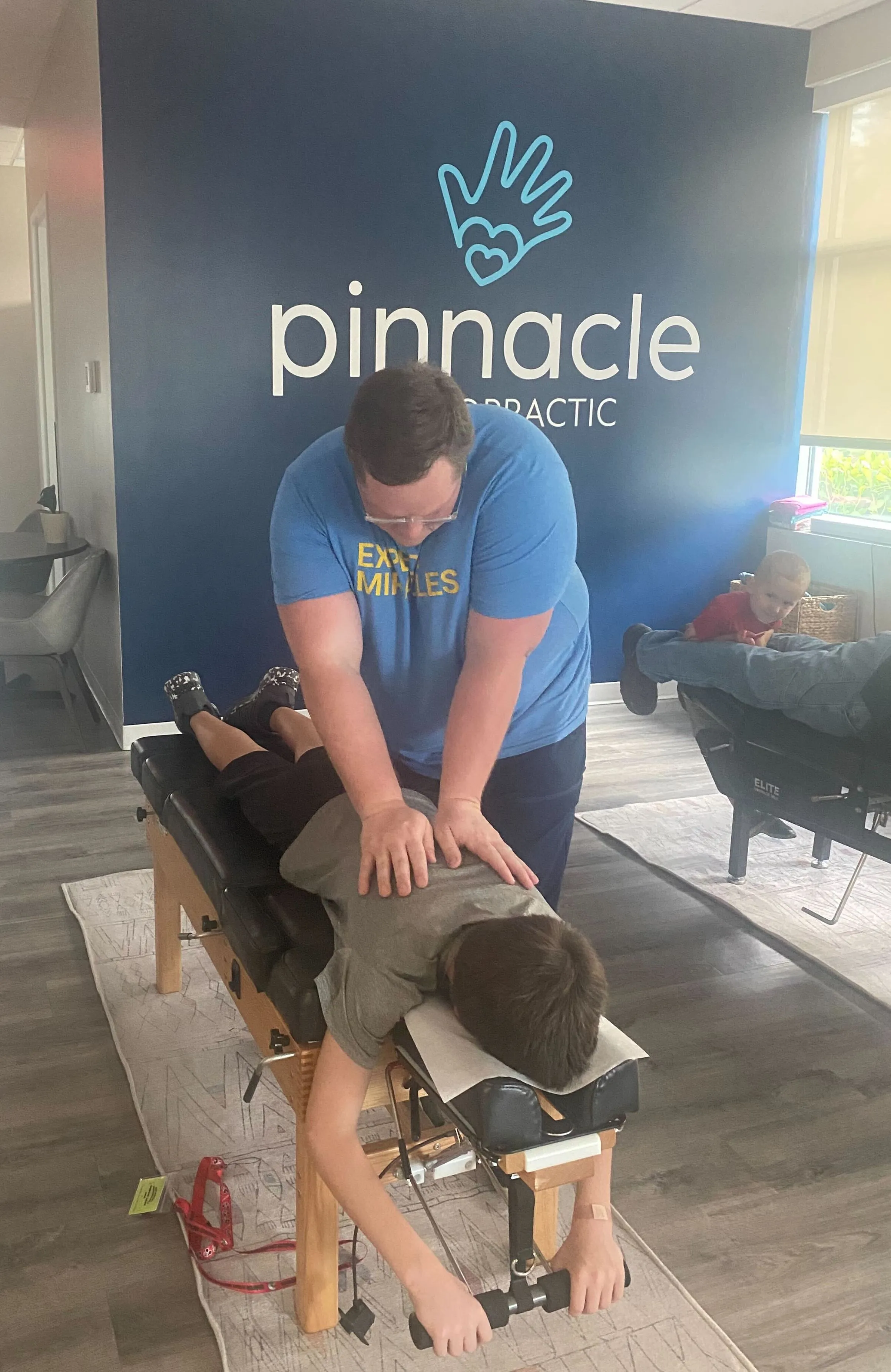
When a family in Lakewood Ranch, Sarasota, or Bradenton comes to us about posture or recurring neck and shoulder tension, we start with a nervous system evaluation to objectively assess tension patterns through the neck, shoulders, and spine. Then we build a personalized care plan of gentle, age-appropriate pediatric chiropractic adjustments designed to support spinal alignment and nervous system function. It pairs naturally with the backpack habits above, and the two work together rather than one replacing the other. For more on the school-year picture, see our guide to back-to-school health.
What Parents Can Do
• Weigh the loaded pack occasionally and compare it to your child's body weight.
• Do a quick fit check each morning: both straps on, snug, and sitting high.
• Encourage movement after school, like swimming, biking, or playing outside, to counter long periods of sitting and carrying.
• Pay attention to how your child stands and walks with the pack on.
• Consider a nervous system evaluation with a pediatric chiropractor if soreness or posture changes keep showing up.
FAQs
How heavy is too heavy for a child's backpack?
A common rule of thumb is no more than about 10 to 15 percent of your child's body weight, and many families aim for the lower end. If your child leans forward or struggles to lift it, it's too heavy.
Is a rolling backpack better than a regular one?
It can help for kids with very heavy loads, though rolling packs have downsides too, like twisting while pulling and trouble on stairs. A well-fitted, well-packed backpack worn on both shoulders works well for most kids.
Can a heavy backpack cause back problems in kids?
Heavy loads and poor carrying habits can contribute to muscle strain and postural changes in growing kids. Fit, weight, and how it's worn all matter.
Can chiropractic care help with backpack-related posture?
Gentle pediatric chiropractic adjustments are designed to support spinal alignment and nervous system function, which plays a role in healthy posture. It works best alongside good backpack habits and plenty of movement.
What happens during a pediatric chiropractic visit for posture concerns?
At Pinnacle Chiropractic, we start with INSiGHT neurological scans to objectively assess nervous system function, then use those results to build a personalized, gentle care plan for your child.
Final Thoughts
A backpack is a small daily load, but kids carry it thousands of times over a school career. A few simple habits, plus support for spinal alignment and nervous system function, go a long way toward protecting a growing spine.
If your child is dealing with recurring neck, shoulder, or back tension, Pinnacle Chiropractic can help you better understand what may be contributing to it. Our neurologically focused approach uses objective INSiGHT scans and gentle pediatric chiropractic adjustments designed specifically for children. Contact Pinnacle Chiropractic to schedule a consultation.



.webp)
.webp)
