Meltdowns and Tantrums: A Nervous System Perspective
Every parent has been there — the grocery store floor, the car seat battle, the meltdown that seems to come out of nowhere over something that seems small from the outside. At Pinnacle Chiropractic, we look at meltdowns and tantrums through a nervous system lens, since they're often less about "bad behavior" and more about a nervous system that's become overwhelmed and hasn't yet learned how to come back down on its own.
Gentle pediatric chiropractic adjustments are designed to support nervous system regulation, which is part of why we see frequent or intense meltdowns as worth understanding rather than just something to manage with consequences.
Here's what's actually happening during a meltdown, what tends to contribute to frequent ones, and how a chiropractic approach fits into supporting your child.
Key Summary
• Tantrums and meltdowns are a normal part of early childhood, driven by a nervous system that's still learning to regulate big emotions.
• A true meltdown is different from a tantrum — it's an involuntary nervous system response, not a deliberate bid for attention.
• Common contributing factors include nervous system dysregulation, sensory overload, fatigue, hunger, and difficulty with transitions.
• Meltdowns that are unusually frequent, intense, or don't ease with typical support strategies are worth discussing with your pediatrician.
• Pediatric chiropractic adjustments are designed to support nervous system regulation, which can play a role in a child's overall capacity to manage big emotions.
Meltdown vs. Tantrum: What's the Difference?
The words get used interchangeably, but there's a real distinction. A tantrum often has an element of choice to it — a child testing a boundary, even if they can't fully articulate that's what's happening. A true meltdown is different: it's an involuntary nervous system response to overwhelm, not something a child can simply choose to stop through willpower or a stern voice. Understanding which one you're dealing with changes how helpful it is to respond with consequences versus co-regulation.
Why This Matters
Frequent, intense meltdowns are exhausting for the whole family, and it's easy to interpret them as a parenting or discipline problem. But a child in the middle of a genuine meltdown isn't in a state where reasoning, bargaining, or discipline actually reach them — their nervous system has essentially hijacked the moment. Understanding that distinction changes what actually helps, both in the moment and over time.
Common Contributing Factors
Frequent meltdowns rarely come from just one thing. Some of the most common contributing factors we see include:
• Nervous system dysregulation — a nervous system that spends a lot of time in a heightened stress state has a much smaller window before it tips into overwhelm.
• Sensory overload — noise, crowds, bright lights, or too much stimulation can push a child past their capacity, especially for kids who are more sensory-sensitive.
• Fatigue and hunger — a tired or hungry nervous system has far less capacity to manage frustration than a well-rested, well-fed one.
• Difficulty with transitions — moving from one activity to another is a common meltdown trigger, especially for younger kids.
• Limited language for big emotions — younger kids especially don't yet have the words to express overwhelm, so it comes out physically instead.
Signs Parents May Notice
• A meltdown that seems disproportionate to what triggered it.
• A child who can't be reasoned with or redirected once a meltdown has started.
• Meltdowns that cluster around transitions, sensory-heavy environments, or the end of a long day.
• A pattern of meltdowns easing once a child is fed, rested, or removed from an overstimulating environment.
• Meltdowns that seem to be increasing in frequency or intensity over time, rather than easing as a child gets older.
The Nervous System Connection
The nervous system governs how the body moves between a calm, regulated state and a heightened, "fight or flight" state. A meltdown happens when a child's nervous system tips into that heightened state faster than they can manage, and stays there longer than it takes most kids to recover. At Pinnacle Chiropractic, we use objective INSiGHT scans — thermography, surface EMG, and heart rate variability — to get a clear, measured picture of how a child's nervous system is functioning, rather than guessing. We measure, we don't guess.
How Pinnacle Chiropractic Approaches Meltdowns
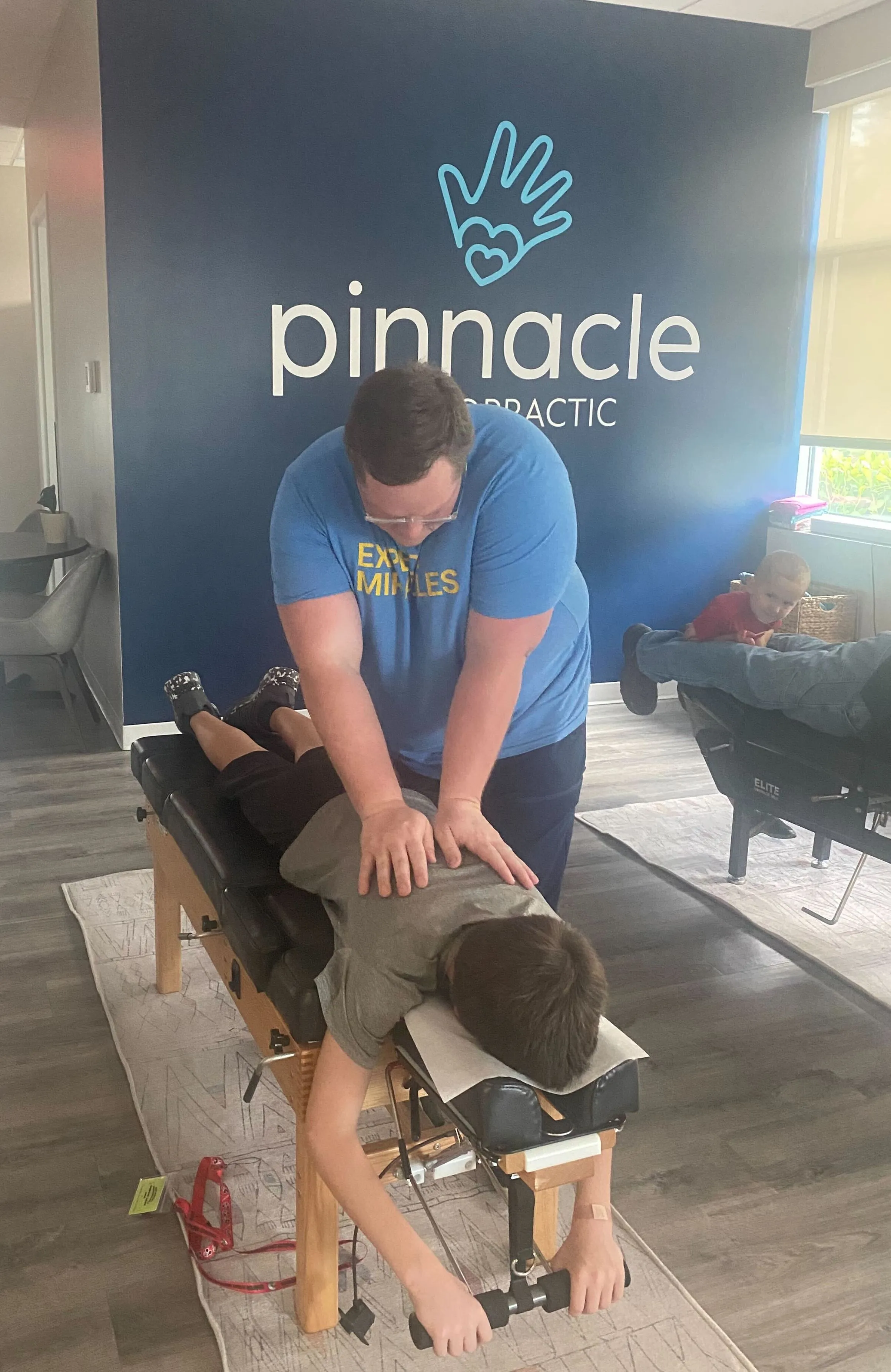
When a family comes to us with a child experiencing frequent or intense meltdowns, we start with a nervous system evaluation to objectively assess regulation patterns. From there, we build a personalized care plan using gentle, age-appropriate pediatric chiropractic adjustments designed to support better nervous system regulation. Many Lakewood Ranch, Sarasota, and Bradenton families notice these patterns overlap with other nervous-system-related habits, since they often stem from the same underlying regulation challenge.
What Parents Can Do
• Stay calm during a meltdown rather than escalating — your regulated nervous system helps co-regulate theirs.
• Protect against predictable triggers when you can: build in buffer time for transitions, and watch for hunger and fatigue.
• Name the feeling once things have calmed down, rather than during the meltdown itself.
• Avoid reasoning or negotiating mid-meltdown — wait until your child's nervous system has actually come back down.
• Consider a nervous system evaluation with a pediatric chiropractor to get an objective look at what may be contributing.
FAQs
Is a meltdown the same thing as a tantrum?
Not exactly. A tantrum often carries some element of choice or testing a boundary, while a true meltdown is an involuntary nervous system response to overwhelm that a child can't simply choose to stop.
At what age do meltdowns usually improve?
Most kids show significant improvement in emotional regulation between ages 3 and 6 as the nervous system matures, though the timeline varies a lot by child.
Should I punish my child for a meltdown?
Punishment during or immediately after a meltdown tends to add more stress to an already overwhelmed nervous system, rather than teaching regulation. A calmer, co-regulation-based approach tends to work better, with any conversation about behavior saved for after things have settled.
Can chiropractic care help with meltdowns?
Gentle pediatric chiropractic adjustments are designed to support nervous system regulation, which plays a role in a child's overall capacity to manage big emotions. It works best alongside your pediatrician's guidance, not as a replacement for it.
What happens during a pediatric chiropractic visit for meltdowns?
At Pinnacle Chiropractic, we start with INSiGHT neurological scans to objectively assess nervous system function, then use those results to build a personalized, gentle care plan for your child.
Final Thoughts
Meltdowns are hard on everyone, but understanding them as a nervous system response rather than a behavior problem changes both how you respond in the moment and what actually helps over time. Understanding the contributing factors, alongside your pediatrician's guidance for anything more significant, gives families a fuller picture of what's going on and what can help.
If your child deals with frequent or intense meltdowns, Pinnacle Chiropractic can help you better understand what may be contributing to it. Our neurologically focused approach uses objective INSiGHT scans and gentle pediatric chiropractic adjustments designed specifically for children. Contact Pinnacle Chiropractic to schedule a consultation.



.webp)
.webp)