


Flat Feet in Kids: What's Normal, What to Watch, and How Movement Connects
Flat feet are very common in young children, and in most cases they are a normal stage of development. Babies and toddlers are born with a pad of fat in the arch area, and the arch itself usually forms gradually through the early school years. Still, parents notice flat feet, worry about shoes and sports, and wonder whether to do something. At Pinnacle Chiropractic, we hear this question often from families in Lakewood Ranch, Sarasota, and Bradenton.
This article explains what is typical, when it is worth getting a closer look, and how foot posture fits into the bigger picture of how a child moves and how the nervous system coordinates the body.
Key Summary
• Most young children have flat-looking feet, and arches typically develop gradually through early childhood.
• Flexible flat feet, where an arch appears when your child stands on tiptoes, are the most common type and are usually painless.
• Pain, limping, stiffness, a foot that does not form an arch on tiptoes, or one foot that looks different from the other are worth mentioning to your pediatrician.
• Feet are part of a whole-body movement system, and posture, balance, and coordination all work together.
• Gentle pediatric chiropractic care is designed to support nervous system function and movement, not to "fix" arches.
Why Do Kids Have Flat Feet?
The arch of the foot is held up by bones, ligaments, and muscles. In babies and toddlers, those structures are still maturing and are cushioned by extra soft tissue, so feet look flat. As children walk, run, and play, strength and ligament tone build, and the arch gradually appears. Genetics also play a role, and many flat-footed children have a parent with similar feet.
Flexible vs. Rigid Flat Feet
Knowing the difference helps parents know what to watch for.
• Flexible flat feet — the arch is visible when your child sits, stands on tiptoes, or the big toe is gently lifted, and flattens when standing. This is the most common type and is usually painless.
• Rigid flat feet — the arch does not appear in any position, and the foot may feel stiff. This is less common and worth having evaluated by your pediatrician.
Why This Matters
For most kids, flat feet never cause problems. But feet are the foundation for walking, running, and balance, so parents often wonder whether foot posture is connected to other movement patterns they see, such as tripping, tiring quickly, or preferring to sit on the floor in certain positions. Our post on why W-sitting, toe-walking, and clumsiness are often connected explores how these patterns can overlap, and our article on toe-walking in toddlers covers the opposite foot pattern.
Signs Parents May Notice
Flat feet alone are rarely a concern, but these signs are worth bringing up with your child's providers:
• Complaints of foot, ankle, or leg pain, especially after activity.
• A limp or a child who avoids running and jumping.
• Shoes that wear down unevenly or very quickly.
• Frequent tripping or clumsiness compared with peers.
• An arch that never appears, even on tiptoes.
• One foot that looks different from the other.
The Nervous System Connection
The nervous system constantly sends information between the feet and the brain about pressure, position, and balance, and the brain uses that information to coordinate muscles throughout the legs, hips, and trunk. That is why a child's movement is a whole-body story rather than a foot story. Gentle pediatric chiropractic adjustments are designed to support nervous system function and the way the body coordinates movement. They are not designed to create an arch or treat a foot condition. For more on how coordination develops, see our article on chiropractic care for balance and coordination in children.
What Parents Can Do
• Encourage barefoot play on safe surfaces like grass and sand, which lets foot muscles work naturally.
• Choose supportive, flexible shoes that fit well and have room for growth.
• Build in varied movement such as climbing, balancing, hopping, and swimming.
• Check your child's shoe wear patterns for clues about how they walk.
• Pay attention to heavy loads. Our post on heavy backpacks and posture shares simple ways to protect your child's posture.
• Ask your pediatrician about a referral if pain, stiffness, or asymmetry is present.
How Pinnacle Chiropractic Approaches Movement and Posture
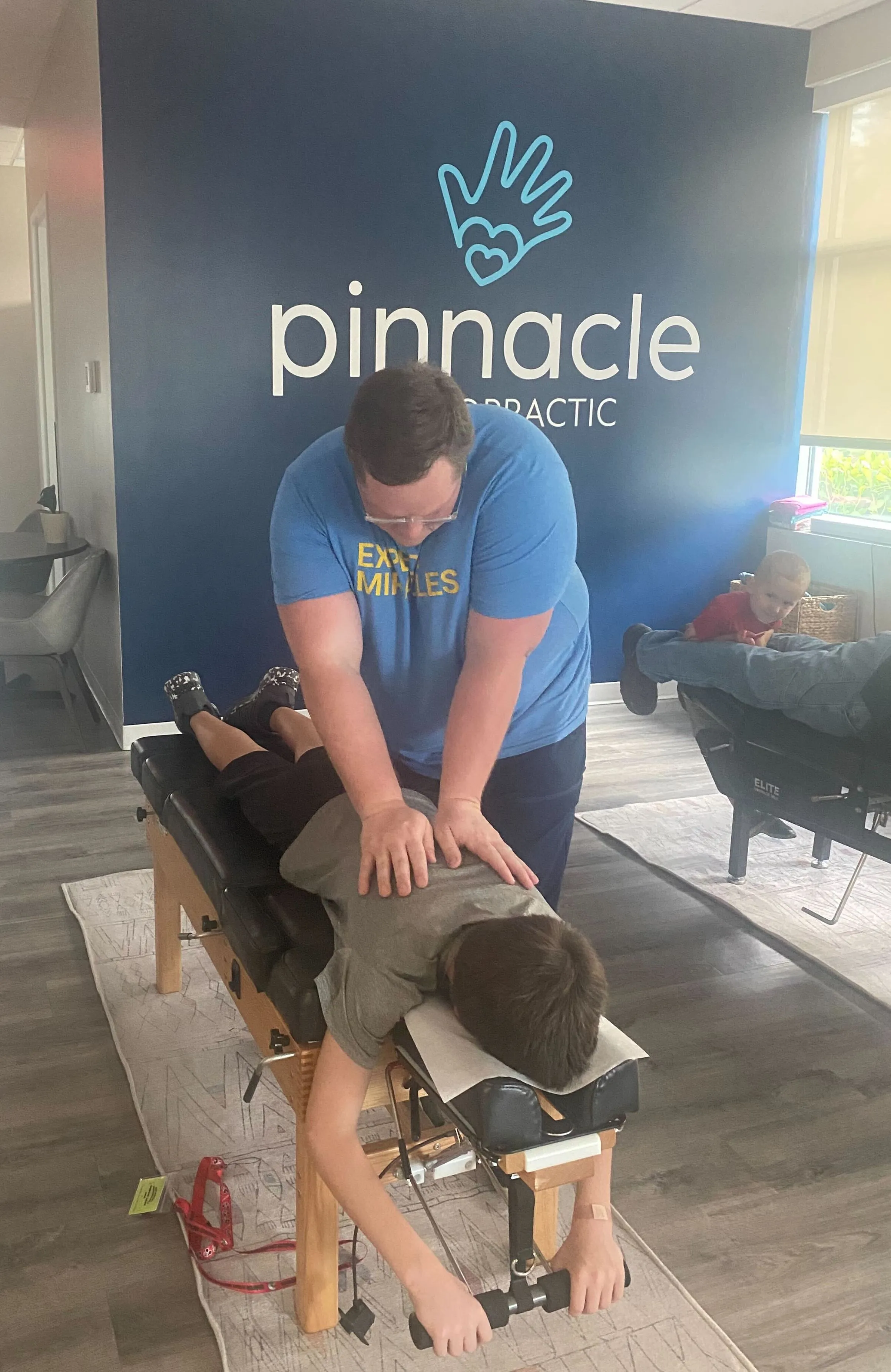
At Pinnacle Chiropractic, we look at the whole child. We begin with a nervous system evaluation using objective INSiGHT scans, including thermography, surface EMG, and heart rate variability, because we measure, we don't guess. From there, we create a personalized plan of gentle, age-appropriate pediatric chiropractic adjustments and movement guidance, always working alongside your pediatrician and any specialists your child sees.
FAQs
At what age do arches develop?
Arches usually develop gradually through early childhood, and many children have a visible arch by around age six to ten. The timing varies from child to child.
Do flat feet cause problems later?
Most flexible flat feet never cause problems. If your child has pain or stiffness, your pediatrician can decide whether further evaluation is helpful.
Do kids with flat feet need special shoes or inserts?
Most children with painless, flexible flat feet do not need special inserts. Supportive, well-fitting shoes are usually enough, and your pediatrician can advise if more is needed.
Can walking barefoot help?
Barefoot play on safe surfaces gives foot muscles more chances to work, and many pediatric providers encourage it. It is not a cure, but it is a simple, healthy habit.
Can chiropractic care fix flat feet?
No. Gentle pediatric chiropractic adjustments are designed to support nervous system function and coordinated movement, not to change arch shape. We work alongside your pediatrician for any foot concerns.
When should I see a specialist?
If your child has pain, a limp, a stiff foot, or an arch that never appears, mention it to your pediatrician, who can decide whether a specialist is helpful.
Final Thoughts
Flat feet are usually a normal chapter in a child's development. Encouraging varied movement, supportive shoes, and active play is a great foundation, and professional guidance is there if something seems off.
If you would like to understand how your child's nervous system and movement fit together, Pinnacle Chiropractic is here to help. Our neurologically focused approach uses objective INSiGHT scans and gentle pediatric chiropractic adjustments designed specifically for children. Contact Pinnacle Chiropractic to schedule a consultation.



.webp)
.webp)
